
HAPS vs Satellites: Which Wins In Stratospheric Coverage?
1. The Question in Its Own Way reveals an underlying shift in the way we View Coverage
For nearly several decades the discussion on reaching remote or underserved regions by air has been defined as a decision between ground infrastructure and satellites. The advent of high-altitude platform stations is introducing an additional option that doesn't seem to be in a neat way This is exactly what gives the discussion its uniqueness. HAPS aren't seeking to replace satellites everywhere. They're competing for use situations where physics operating at 20 kilometers rather than 500 or 35,000 kilometres produces meaningfully better outcomes. Understanding the extent to which that advantage might be real and where it isn't is the key to winning.
2. Lasting latency is where HAPS succeeds Clearly
The length of time a signal travels is determined by distance. This is where stratospheric platforms have an unambiguous advantage in structural design over all orbital systems. A geostationary satellite is located approximately 35,786 km above the equator and produces continuous latency of approximately 600 milliseconds. This can be utilized for calls that have a noticeable delay, however it is not ideal for real-time applications. Low Earth orbit satellites have dramatically improved this issue and operate at 550 to 1,200 kilometers with latency in the 20-40 millisecond range. A HAPS vehicle travelling at 20 kms can produce latency numbers equivalent with terrestrial network. For those applications that require responsiveness such as industrial control systems, financial transactions, emergency communications direct-to-cell connectivity the difference isn't just marginal.
3. Satellites win on global coverage, and That Matters
The stratospheric platform that is currently being developed could cover the entire globe. One HAPS vehicle covers a regional footprint that is enormous by terrestrial standards, but limitless. In order to achieve global coverage, one would need an array of platforms spread around the globe, each with its own operation the energy system, its own power source, and station monitoring. Satellite constellations and networks, especially the large LEO networks, are able to cover the planet's surface by overlapping capabilities that stratospheric systems cannot replicate with current vehicle counts. For applications that require truly global coverage (marine tracking, global messaging, polar coverage, satellites are the only option that is viable at the scale.
4. Resolution and Persistence Favour The HAPS Program for Earth Observation
If the mission requires monitoring a specific region continuously — tracking methane emissions from an industrial corridor, watching the progress of a wildfire unfold in real time or monitoring oil pollutants spreading from an offshore incident The continuous, close-proximity nature of a stratospheric system produces quality data that satellites struggle to match. A satellite operating in low Earth orbit passes by any point on the floor for minutes at time which is followed by revisit intervals by hours or days, depending on the size of the constellation. A HAPS vehicle that stays above the same area throughout weeks allows continuous observation with sensor proximity which enables much higher resolution spatial. To use the stratospheric Earth observation method that persistence can be better than global reach.
5. Payload Flexibility is a HAPS Advantage Satellites Can't be easily matched
After a satellite has been set to launch, the payload fixed. Upgrading sensors, swapping communication hardware or introducing new instruments requires launching completely new spacecraft. A stratospheric spacecraft returns to earth after missions and its payload can be reconfigured, upgraded or completely changed as mission requirements evolve or as advances in technology become available. Sceye's airship design specifically accommodates an effective payload capacity, which enables the combination of telecommunications signals, greenhouse gas sensors and emergency detection systems to be placed on the same aircraft this flexibility requires multiple satellites to replicate each with its own launch cost and orbital slot.
6. The Cost Structure Is Significantly Different
Launching a satellite is a process that involves rocket costs, ground segment development, insurance and the recognition that hardware failures on orbit are permanent write-offs. Stratospheric platforms operate like aircraft — they can be recovered, inspected, repaired, and redeployed. This doesn't mean that they are cheaper than satellites on a basis of coverage-area, but it changes the risk profile, as well as their upgrade cost significantly. In the case of operators who are testing new products also, as they enter markets the capability to retrieve and change the platform rather in accepting hardware orbitals as sunk-cost offers a significant advantage in operation particularly in the initial commercial phase the HAPS market is working through.
7. HAPS Can Function as 5G Backhaul In Place of Satellites Where Satellites Do Not Efficiently
The telecommunications framework that's enabled by the high-altitude platform station that operates as a HIBS — effectively an actual cell tower in the sky — is designed to communicate with wireless network protocols in a way that satellite connection historically did not. Beamforming with a stratospheric antenna allows for dynamic allocation of signals over a large coverage area, supporting 5G backhaul to earth infrastructure as well as direct to device connections simultaneously. Satellites are getting more adept in this arena, however being closer to the ground can give stratospheric systems an advantage in terms of signal quantity, frequency reuse and compatibility with spectrum allocations designed for terrestrial networks.
8. The Operational Risk and Weather Variation Differ Significantly Between the Two
Satellites that are stable in orbit, tend to be indifferent to the weather on Earth. A HAPS vehicle operating in the stratosphere will face a more complex operational environment that includes stratospheric weather patterns that are influenced by temperature gradients as well as the engineering challenge of making it through low-altitude night without losing station. The diurnal cycle, the daily rhythm of solar energy supply and power draw at night is a design limitation that all solar-powered HAPS have to solve. Advances in lithium-sulfur battery energy capacity and solar cell efficiency are closing the gap, but it represents the actual operational issues that satellite operators don't need to address in the same fashion.
9. The truth is They serve different missions.
A comparison of satellites versus HAPS as an all-or-nothing contest misses the point of how the non-terrestrial infrastructure will grow. The most accurate view is one with a layering structure in which satellites handle global coverage and applications where universal coverage is more important than anything else, while stratospheric platforms serve persistent regional missionsconnectivity in highly challenging environments, continuous monitoring of environmental conditions as well as disaster response. expanding 5G to areas in which terrestrial rollouts aren't financially feasible. Sceye's location echoes precisely this premise: a platform is designed to perform tasks in a specific region to last for a prolonged period, with sensors and communications that satellites simply cannot replicate at this altitude or the distance.
10. The Competition Will In the End Sharpen Both Technologies
There is a reasonable argument that the growth of reputable HAPS programs has increased innovations in satellites and the reverse is also true. LEO constellation operators have pushed coverage density and latency in ways that raise the standards HAPS should be cleared to compete. HAPS developers have demonstrated persistent regional monitoring capabilities that make satellite operators consider how to improve the resolution of sensors and revisit frequencies. It is the Sceye and SoftBank partnership targeting Japan's nationwide HAPS network, which includes pre-commercial services set for 2026 is among the most clear signals that shows that stratospheric networks have moved from being a theoretical competition into an active participant in determining how non-terrestrial connectivity market and the market for observation develops. Both technologies will be more effective for the demands. Check out the top Sceye Inc for blog recommendations including Diurnal flight explained, what haps, Sceye Founder, Stratospheric infrastructure, Monitor Oil Pollution, sceye connectivity solutions, Stratosphere vs Satellite, space- high altitude balloon stratospheric balloon haps, stratospheric internet rollout begins offering coverage to remote regions, investment in future tecnologies and more.
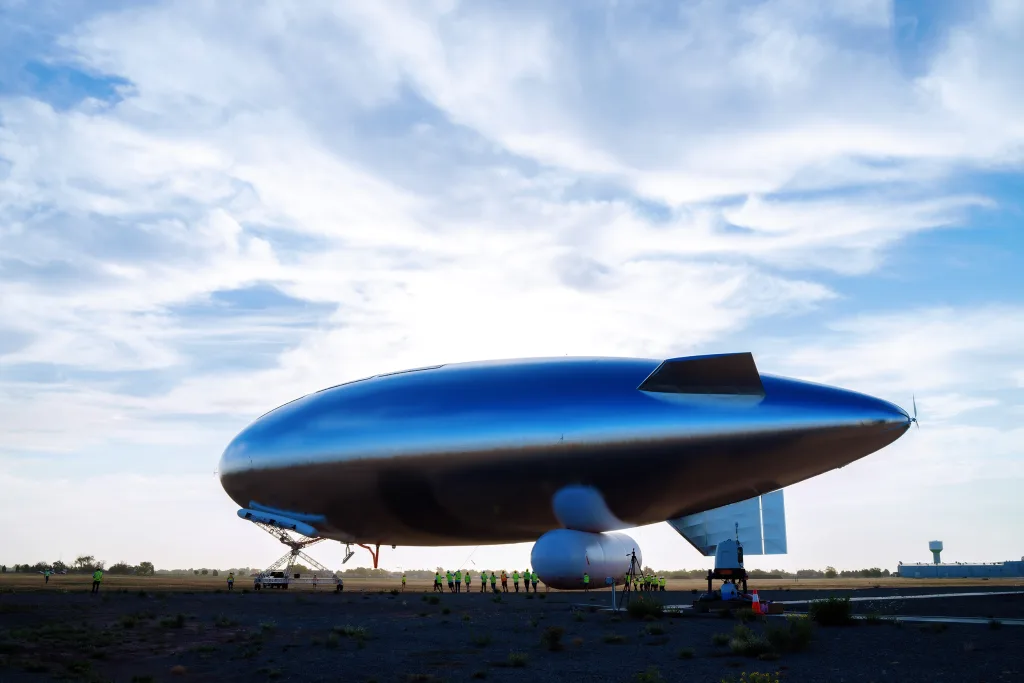
Sceye's Solar-Powered Airships Will Bring 5g Technology To Remote Regions
1. The Connectivity Gap is an Infrastructure Economics Issue First
About 2.6 billion people are still without an internet connection that is meaningful, and there is rarely due to the absence of suitable technology. It's an absence of financial justification to install that technology in regions where population density isn't sufficient and the terrain isn't suitable or stability in the political landscape cannot be trusted to guarantee a typical return on infrastructure investments. Building mobile towers across mountainous archipelagos or arid interior regions or isolated island chains costs real money against revenue projections that do not support the idea. This is the reason this connectivity gap has remained through decades of work and genuine goodwill. The issue isn't a lack of awareness or intent however, it's the unit cost of terrestrial expansion in areas which aren't compatible with the standard infrastructure plan of action.
2. Solar-powered Airships Rewrite the Deployment Economical
A stratospheric airplane operating as cell towers in the sky alters the costs of connectivity from remote locations, and in ways that have a bearing in a practical sense. A single platform located at 20 kilometers altitude is able to cover an area that would require many terrestrial towers to replicate however, without having the construction or land acquisition, the power infrastructure, and constant maintenance that ground-based deployments demand. Solar power takes fuel logistics from the equation completely — the platform generates energy by absorbing sunlight and accumulates it into high-density lithium batteries for operation over night, and performs its task without supply chains reaching out into remote regions. If the barrier for connectivity is actually the expense and complexity of the physical infrastructure the solar-powered solution is a totally unique proposition.
3. The 5G Compatibility Questions Are More Important Than It Sounds
Broadband that is delivered from the upper atmosphere is only economically viable when it is connected to devices that people actually own. The first satellite internet systems needed sophisticated terminals that were costly big, heavy, and ineffective for mass-market use. The evolution of HIBS technology – High-Altitude IMT Base Station standards revolutionizes the way we use stratospheric technology compatible with same 4G and fiveG protocols that smartphones use today. A Sceye airship that functions as a telecom antenna in the stratospheric region is able to support mobile devices from a standard smartphone without needing any additional hardware on the user's end. This compatibility with existing operating systems is the key difference between a solution for connectivity which is available to all in a geographical area of coverage and one which only serves those who be able to pay for special equipment.
4. Beamforming Transforms a Large Footprint Into Efficient Targeted Coverage
The raw coverage footprint of stratospheric platforms is massive but the coverage it provides and its useful capacity are different things. Broadcasting in a uniform way over a region of 300 kilometres makes use of the vast majority of spectrum over uninhabited terrain, the open ocean, and other areas without any active users. Beamforming technology allows the stratospheric telecom signal to focus energy in a dynamic manner towards areas of demand that actually exist -such as a fishing village on some part of the coastline, an agricultural region in another and a town which is undergoing a disaster third. This intelligent signal management significantly enhances spectral efficiency. This directly affects the amount of capacity offered to users than the theoretical coverage limit the platform could provide If it broadcasts indiscriminately.
5G backhaul-related applications benefit from the exact same approachdirected high-capacity links for ground infrastructure devices that require them instead of spraying capacity across empty territory.
5. Sceye's Airship Design maximizes the payload it is an option for Telecoms Hardware
The telecommunications components on a stratospheric platform — antenna arrays and signal processing units beamforming hardware power management systemshave real weight and volume. A vehicle that is spending the bulk of its structural and energy budget simply flying around is not able to afford meaningful telecoms equipment. Sceye's lighter-than-air design addresses this directly. Buoyancy drives the vehicle without continuously consuming energy for lift, which means available capacity and power can support a telecoms network large enough to provide commercially worthwhile capacity, not just a small signal spread across an immense area. The airship's structure isn't only a side effect to the connectivity goal -it's what makes carrying a serious telecoms payload alongside other mission equipment simultaneously viable.
6. The Diurnal cycle determines if the Service is Continuous or Intermittent.
A connectivity service that runs during daylight, and shuts down at night is not an internet connectivity service, it's just a demonstration. In order for Sceye's airships powered by solar to offer the kind of constant surveillance that remote communities as well as emergency personnel, and commercial operators depend on, it must deal with the overnight energy issue quickly and repeatedly. The diurnal cycle – generating sufficient solar power during daylight hours to power all systems as well as charge batteries enough to remain operational until next dawn — is the governing engineering restriction. Advances in lithium-sulfur battery energy density that is approaching 425 Wh/kg. Also, improvements in the efficiency of solar cells of aircrafts operating in stratospheric space can close the loop. Without these, endurance and continuity remain only a theoretical concept, not operational.
7. Remote Connectivity Causes Additional Social and Economic Impacts
The case for connecting remote areas isn't just purely humanitarian in the abstract sense. Connectivity allows telemedicine, which reduces the cost of healthcare delivery even in regions with no nearby hospitals. It also allows for distance-based education that doesn't require schools to be built in every single community. It provides financial services access that replaces the cash-dependent economy by the efficacy in digital payments. It enables early warning systems of emergencies to be able to get in touch with population most at risk. Each of these outcomes will build in time as communities gain digital literacy and local economy adapt to reliable connectivity. The massive rollout of the internet that is beginning to offer coverage to remote regions doesn't mean that it's a luxury and infrastructure that is affecting downstream areas like the areas of education, health, safety, and economic participation simultaneously.
8. Japan's HAPS Network demonstrates What National-Scale deployment looks like
This SoftBank collaboration with Sceye which aims to introduce the pre-commercialization of HAPS options in Japan in 2026 is important partly due to its scope. A nation-wide network implies multiple platforms providing overlapping and continuous coverage across the country's geography — thousands of islands interior, long coastlinesthat creates the exact kind of coverage challenges the stratospheric network is designed to overcome. Japan also has a complex technological and regulatory framework where the operational challenges associated with managing stratospheric platforms on a national scale are expected to be confronted and solved in a manner that yields lessons for the next deployment. What's happening in Japan will influence what happens over Indonesia, The Philippines, Canada, and all other nations with comparable geographic and coverage objectives.
9. The founder's perspective shapes how the Connectivity Mission Is Reframed
Mikkel Vestergaard's principle of founding at Sceye thinks of connectivity not as commercial product which happens to reach remote locations, but as a system with a social obligation to it. This framing influences which implementation scenarios Sceye prioritises and the partnerships it seeks to establish and how it communicates the goal of its platforms to regulators, investors and potential operators. The focus on remote regions or communities that are not well-served, as well as resilient connectivity to disasters reflects the view that the layer being constructed should support the population that are not served by existing infrastructure. It is not an optional benefit but as a core element of design. Sustainable innovation in aerospace, in Sceye's view, is about building something that fills in the gaps instead of enhancing the services offered to populations already well-served.
10. The Stratospheric Connectivity Layer Is Starting to look like a natural progression
For many years, HAPS connectivity existed primarily in the form of a concept that brought in investment and provided demonstration flights without generating commercial services. The combination and evolution of battery chemistry, increasing efficient solar cells HIBS standards that enable device compatibility, and the commitment of commercial partnerships has shifted the path. Sceye's Solar-powered airships provide a convergence of these enabling technologies at a time when the demand-side — remote connectivity, disaster resilience, 5G's expansion has never been more clearly defined. The stratospheric layer that connects terrestrial satellites and orbital satellites has not been progressively eroding over the top of. It is beginning to be developed with deliberate intent, and has specific areas of coverage, precise technical specifications, and specific commercial timelines relating to it. Follow the most popular HAPS technology leader for site advice including sceye services, Diurnal flight explained, Sceye HAPS, softbank haps, sceye softbank partnership, Sceye Inc, Stratospheric broadband, sceye haps project status, Sceye stratosphere, Stratospheric infrastructure and more.
