
Does a cambridge driving school teach manual driving?Does a cambridge driving school teach manual driving?
Learning to drive a manual car can feel challenging at first, especially when you are learning how the clutch, gears, accelerator, brakes, and steering work together. However, with structured tuition and regular practice, manual driving becomes a natural skill rather than something you have to think about constantly. 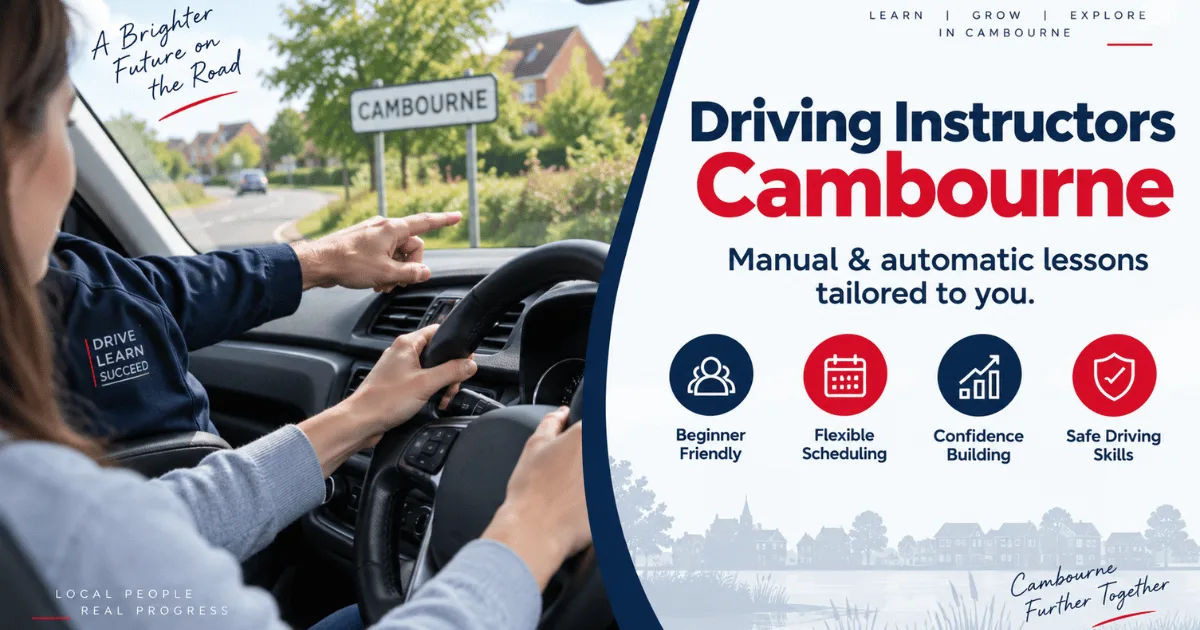 A cambridge driving school can be a useful starting point for learners who want to understand manual driving from the basics and build confidence before taking their practical test.
For many learners, choosing manual lessons also provides greater flexibility because passing a manual driving test allows you to drive both manual and automatic cars in the UK. This can be particularly useful if you are unsure which type of car you will drive after passing.
But does every Cambridge driving school teach manual driving? What should you expect from manual lessons, and how can you decide whether learning in a manual car is right for you? This guide explains what manual driving tuition normally covers and what learners should consider before booking lessons.
Do Driving Schools in Cambridge Teach Manual Driving?
Yes, many driving schools and independent instructors in Cambridge offer manual driving lessons. Manual tuition remains a common choice for learners because it teaches students how to operate vehicles with a clutch pedal and conventional gearbox.
However, availability depends on the individual instructor or school. Some instructors specialise in manual cars, while others provide both manual and automatic tuition. The best approach is to confirm the vehicle type before booking your first lesson.
A reputable cambridge driving school should be able to explain whether its instructors provide manual lessons, what type of vehicle they use, and whether the car is suitable for beginners.
It is also worth asking whether the same instructor and vehicle will normally be used throughout your training. Consistency can make learning easier because you become familiar with the clutch biting point, gear positions, mirrors, controls, and general feel of the car.
What Is Involved in Learning Manual Driving?
Manual driving involves more coordination than automatic driving because the driver has to select gears and operate the clutch.
A manual car usually has three pedals: the clutch, brake, and accelerator. The clutch allows the engine and gearbox to connect and disconnect smoothly, which makes it possible to change gears without damaging the transmission.
At the beginning, learners often find clutch control the most difficult part.
You need to learn where the clutch begins to engage, commonly called the biting point. You also need to coordinate your left foot with your right foot while controlling the car's movement.
This becomes easier with repetition.
Understanding the Clutch
The clutch is one of the first major skills taught during manual lessons.
Your instructor will normally introduce clutch control in a quiet and suitable area. You may practise moving the clutch pedal slowly until you feel the car begin to respond.
The aim is not simply to memorise a foot movement. You need to understand how the car reacts.
If you release the clutch too quickly, the engine may stall. If you keep the clutch partially engaged for too long, you can cause unnecessary wear.
A good instructor will give you time to practise without making you feel pressured.
Learning Gear Changes
Once you are comfortable moving away, you will begin learning how to select the appropriate gears.
First gear is normally used when moving away from a stationary position. As the vehicle gains speed, you will learn when to move into higher gears.
You will eventually learn to recognise when a gear change is appropriate from the engine sound, vehicle speed, road conditions, and how the car feels.
This is an important part of becoming an independent driver.
Why Choose Manual Driving Lessons?
There are several reasons learners choose manual tuition.
The biggest advantage is flexibility. A driver who passes a manual practical test can generally drive manual and automatic cars, subject to the normal legal requirements of their licence.
A learner who takes an automatic test, on the other hand, receives a licence restricted to automatic vehicles.
This does not mean manual driving is the right choice for everyone. Some learners find automatic cars easier because there is no clutch or manual gear changing.
The right decision depends on your confidence, learning preferences, future vehicle plans, and how quickly you want to become comfortable behind the wheel.
Manual Lessons Can Build Strong Vehicle Control
Manual driving requires you to understand how the car responds to different controls.
You learn clutch control, gear selection, engine braking, acceleration, and smooth changes in speed.
These skills can give learners a deeper understanding of vehicle operation.
That does not automatically make someone a better driver, but the additional coordination can help learners become more aware of what the car is doing.
More Vehicle Choices
Manual cars remain widely available in the used-car market.
Learning manual can therefore give you more choice when you eventually purchase or borrow a vehicle.
You may also encounter manual cars when using family vehicles or driving someone else's car, provided your licence allows you to do so.
What Will Your First Manual Lesson Be Like?
Your first lesson is unlikely to involve complicated traffic situations immediately.
A professional cambridge driving school will usually begin by assessing your existing experience and explaining the vehicle controls.
If you have never driven before, your instructor may start with basic cockpit preparation.
This can include adjusting your seat, mirrors, steering position, head restraint, and seat belt. You will also learn where the main controls are located.
Your instructor may then explain the pedals, gear lever, handbrake, indicators, lights, and other important controls.
After this introduction, you may move on to starting and stopping the vehicle in a quiet environment.
The exact structure depends on your previous experience and confidence.
How Do Manual Driving Lessons Progress?
Manual tuition normally develops gradually.
You may begin with simple vehicle control before progressing to more complicated road situations.
Once you can move away and stop reliably, lessons can include steering, changing gears, dealing with junctions, using mirrors, signalling, meeting other vehicles, and managing traffic.
Later, your training can move towards larger and busier roads.
You may practise roundabouts, pedestrian crossings, traffic lights, dual carriageways, country roads, parking exercises, and independent driving.
A good cambridge driving school should adapt lessons according to your development rather than forcing every learner through exactly the same sequence.
Developing Independent Driving Skills
Being able to operate a manual car is only one part of learning to drive.
You also need observation and planning skills.
For example, approaching a junction requires you to identify the road layout, check mirrors, select an appropriate speed, choose the correct gear, observe other road users, and decide when it is safe to proceed.
Your instructor should gradually reduce assistance as your confidence grows.
The goal is to help you make decisions independently rather than depend on constant instructions.
Can Beginners Learn Manual Driving?
Absolutely.
You do not need previous experience to start manual driving lessons.
In fact, instructors regularly teach complete beginners.
The important thing is to expect some mistakes during the early lessons.
Stalling the engine is extremely common when learning clutch control. It does not mean you are a poor driver.
Similarly, selecting the wrong gear, forgetting an indicator, or struggling with a hill start can happen during training.
Your instructor's job is to help you understand why the mistake happened and how to prevent it in the future.
How Long Does It Take to Learn Manual Driving?
There is no fixed number of lessons that guarantees someone will become test-ready.
Some learners progress quickly, while others need more time with clutch control, traffic situations, or independent decision-making.
Previous driving experience can make a difference, but confidence and regular practice are also important.
Taking lessons consistently can help you retain what you learned in the previous session.
If you leave large gaps between lessons, some skills may feel unfamiliar again when you return.
Private practice can also help where appropriate, provided the supervising driver and vehicle meet the relevant legal requirements.
What Should You Ask a Cambridge Driving School Before Booking?
Before paying for lessons, ask a few practical questions.
First, confirm that manual tuition is available.
Then ask about the instructor's availability, lesson duration, vehicle type, cancellation policy, and pricing.
You can also ask whether the instructor teaches complete beginners.
If you have particular concerns about clutch control, anxiety, motorways, parking, or previous driving experience, mention them when making your enquiry.
A professional cambridge driving school should be willing to explain how its lessons work instead of simply giving you a price and asking you to book immediately.
It can also be useful to ask whether the instructor is an approved driving instructor and whether lessons are structured around the skills required for the practical driving test.
Manual Driving and the Practical Test
Manual driving lessons should prepare you for more than simply operating the gearbox.
You need to develop the complete range of driving skills required for safe and independent driving.
Test preparation can include meeting road users safely, effective mirror use, appropriate signalling, speed management, positioning, junctions, roundabouts, manoeuvres, independent driving, and dealing with hazards.
Your instructor may also conduct mock tests once you have developed sufficient experience.
Mock tests can be useful because they show which areas still require improvement.
Rather than treating the test as the only objective, think of it as an assessment of whether you can drive safely without constant instructor intervention.
What If You Find Manual Driving Difficult?
Do not assume that difficulty during the first few lessons means manual driving is unsuitable for you.
Learning several controls simultaneously can be mentally demanding.
You may need several sessions before clutch control becomes comfortable.
One useful strategy is to focus on one skill at a time.
For example, spend time becoming comfortable with moving away and stopping before worrying too much about complex gear changes.
Then gradually combine the skills.
Your instructor can also identify whether your problem is related to clutch timing, foot positioning, observation, speed control, or simply lack of practice.
When Automatic Driving May Be Better
Manual driving is not mandatory for every learner.
Some people prefer automatic cars because they find them simpler and less physically demanding.
If you struggle significantly with coordinating the clutch and gears, an automatic course may be worth considering.
An automatic vehicle allows you to concentrate more heavily on steering, observation, road positioning, traffic, and hazard awareness.
However, choosing automatic comes with a licence restriction, so it is worth considering your long-term plans before deciding.
How to Choose the Right Manual Instructor
The quality of instruction can have a major effect on your learning experience.
Look for an instructor who explains things clearly and gives you enough opportunity to practise.
Patience is particularly important for beginners.
A good instructor should be able to correct mistakes without making you afraid to try again.
You should also feel comfortable asking questions.
For example, if you do not understand why a particular gear is being selected, ask. Understanding the reason behind an action is usually more useful than simply memorising it.
Reviews can provide useful information, but personal compatibility also matters.
An instructor who works well with one learner may not necessarily be the ideal instructor for another.
Can Manual Lessons Help Nervous Learners?
Yes.
A structured manual course can help nervous learners develop confidence gradually.
The key is progression.
You do not need to start on a busy road and immediately deal with complicated traffic.
Your instructor can begin in a quieter environment and increase the difficulty as your skills improve.
Repeated exposure to familiar situations can also reduce anxiety.
Eventually, tasks that initially seemed complicated can become routine.
For nervous learners, communication with the instructor is especially important. If something feels too difficult, explaining the problem allows the instructor to adjust the lesson.
Conclusion
So, does a cambridge driving school teach manual driving? In many cases, yes. Manual driving remains an established option for learner drivers, and many schools and instructors offer tuition in manual vehicles. However, availability varies between individual instructors, so it is sensible to confirm the vehicle type before booking.
Manual driving requires more coordination than automatic driving because you need to control the clutch, select gears, and manage the accelerator and brake together. These skills can seem difficult during the first few lessons, but they normally become easier through structured practice.
The main advantage of learning manual is flexibility. Passing a manual driving test can allow you to drive both manual and automatic cars, giving you greater choice when selecting a vehicle later.
A good instructor will not simply teach you how to pass a test. They will help you understand vehicle control, observation, road positioning, hazard awareness, traffic management, and independent decision-making.
If you are considering manual lessons, take time to find an instructor who is patient, clear, organised, and suited to your learning style. Ask about lesson structure, vehicle availability, instructor qualifications, prices, and test preparation before committing.
Most importantly, do not judge your ability by your first few lessons. Stalling, awkward gear changes, and hesitation are normal parts of learning manual driving. With regular practice and effective instruction, the process can become much more comfortable.
For learners who want greater flexibility after passing their test, manual driving can still be a practical and worthwhile choice.